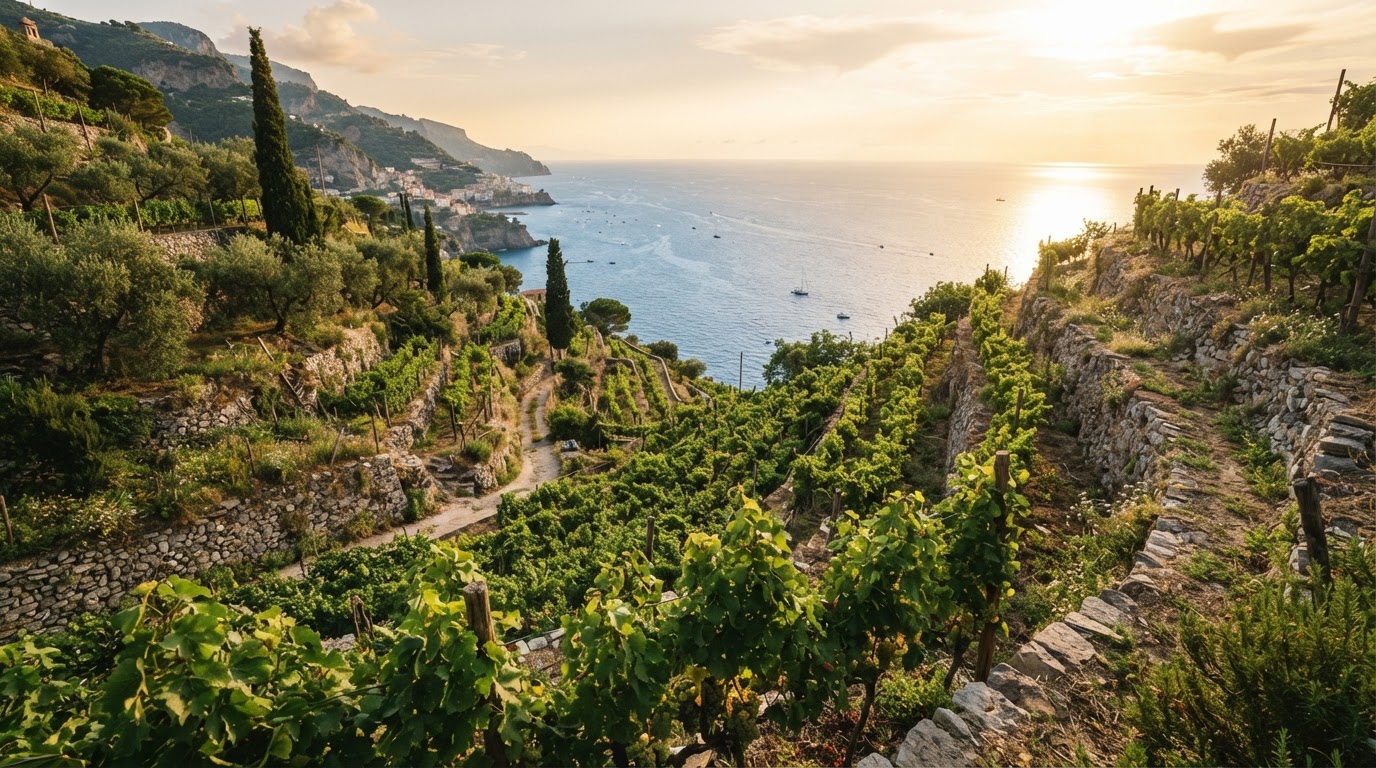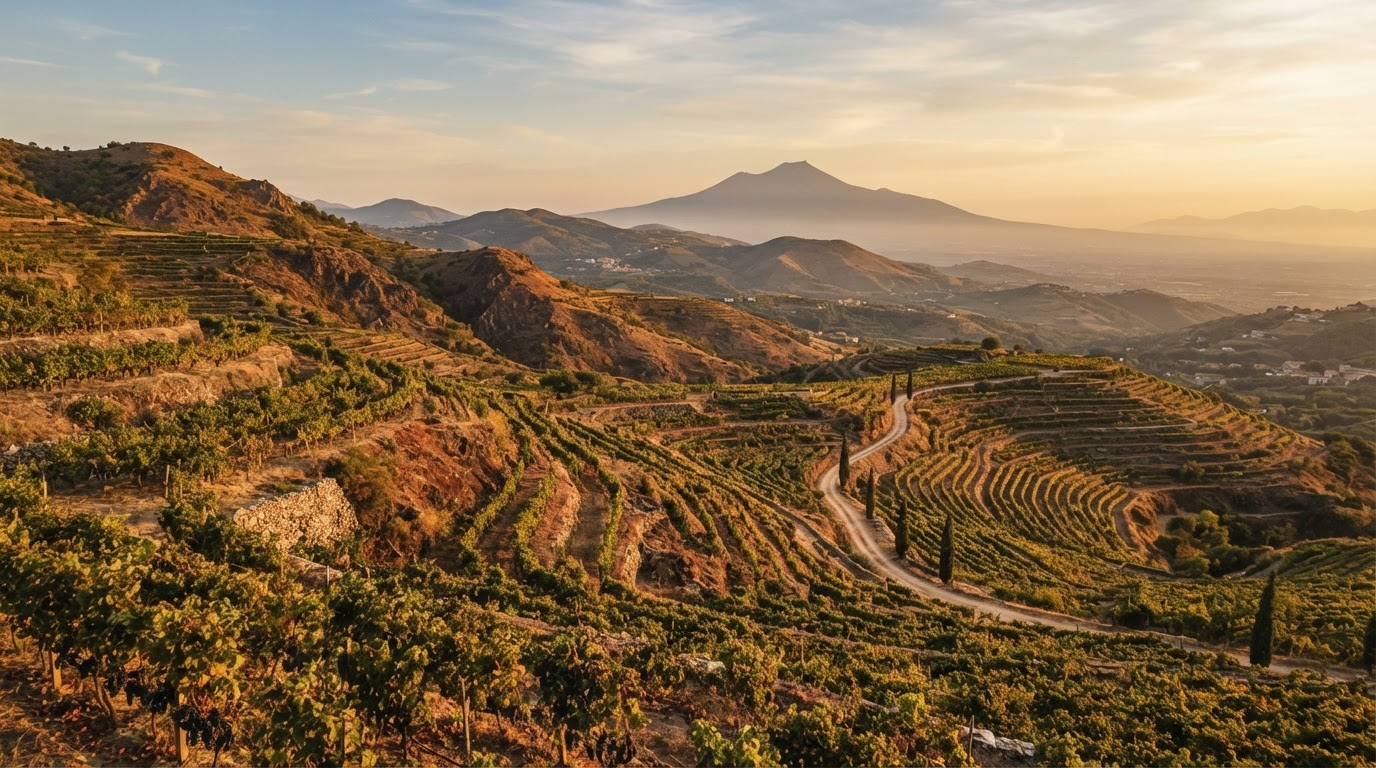
Ask a British wine drinker to name an Italian region and you will hear Tuscany, then Piedmont, then maybe Sicily. Campania rarely comes up — and that, frankly, is the whole reason Jo and I started importing from here in 2011. The best wines of this region are made in quantities too small and from grapes too obscure for the supermarket buyer to bother with.
A region shaped by fire
Campania's soils are volcanic — laid down by Vesuvius and the Campi Flegrei over tens of thousands of years. Because phylloxera cannot survive in loose volcanic pumice, many of the vines we source are still on their own roots, ungrafted, 80 to 120 years old. That is not a marketing line. It is the reason an Aglianico from Irpinia tastes of flint and liquorice in a way no grafted vine, anywhere else, can quite reproduce.
We only sell wines that we drink at our own Sunday family table. If it won't hold up to a four-hour lunch, it doesn't make the cellar.
The native grapes that nearly vanished
After phylloxera and the Second World War, most of southern Italy grafted over to higher-yielding international varieties. A handful of families refused. The Mastroberardinos kept Aglianico, Fiano and Greco alive on their own roots in Atripalda when almost nobody else saw a future for them. Without that stubbornness, there would be no Taurasi DOCG today — and no Campania Wines.
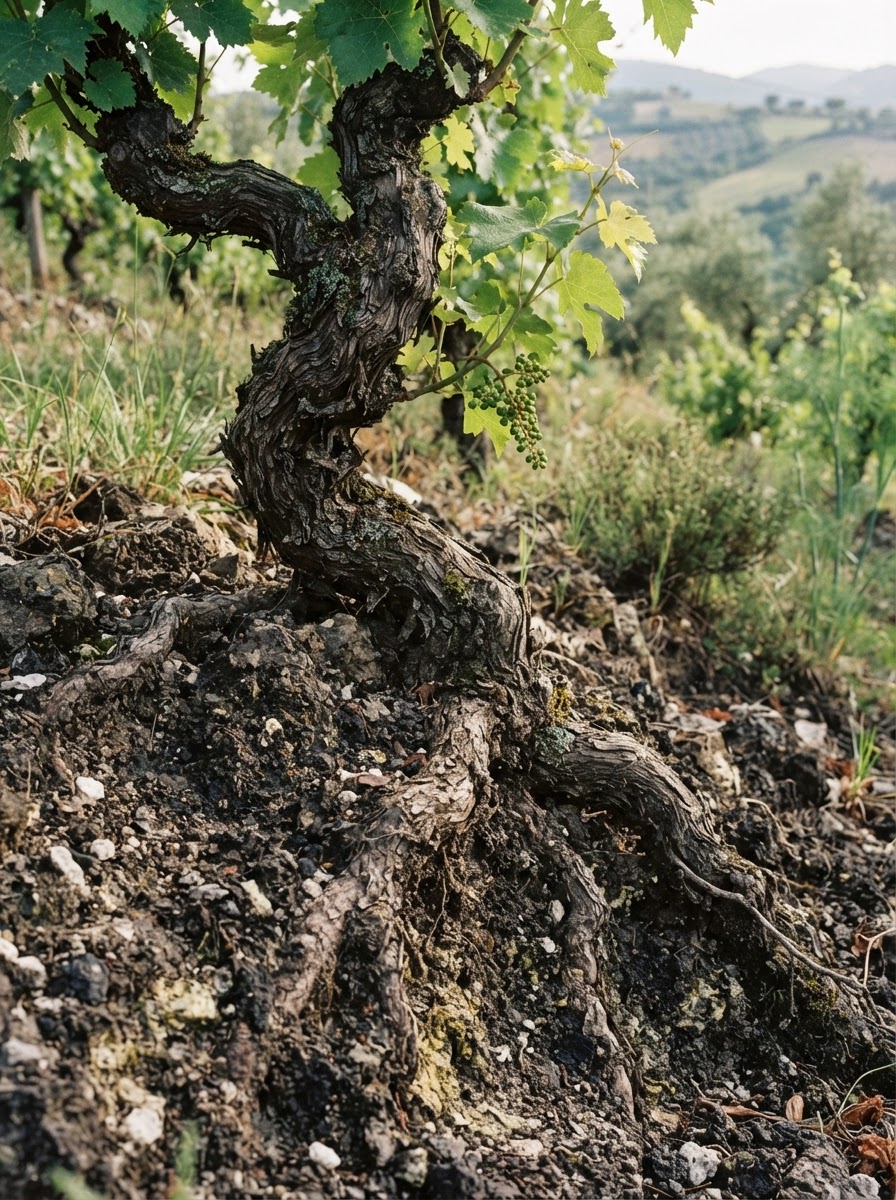
What you taste in a glass of Taurasi or Greco di Tufo is the payoff of a century of refusal — refusal to graft, refusal to industrialise, refusal to let a region's identity disappear into a generic red blend. Fifteen years on, that is still the only story we are interested in telling.