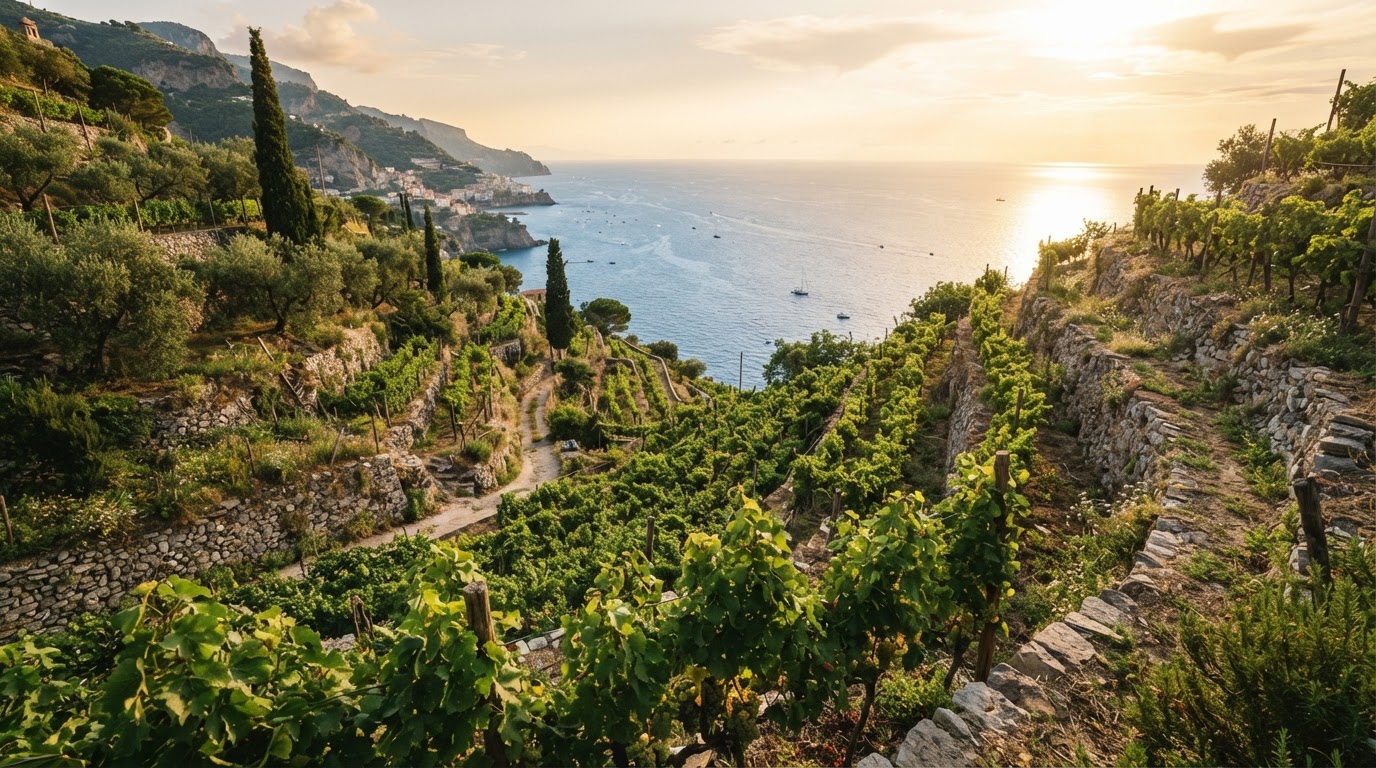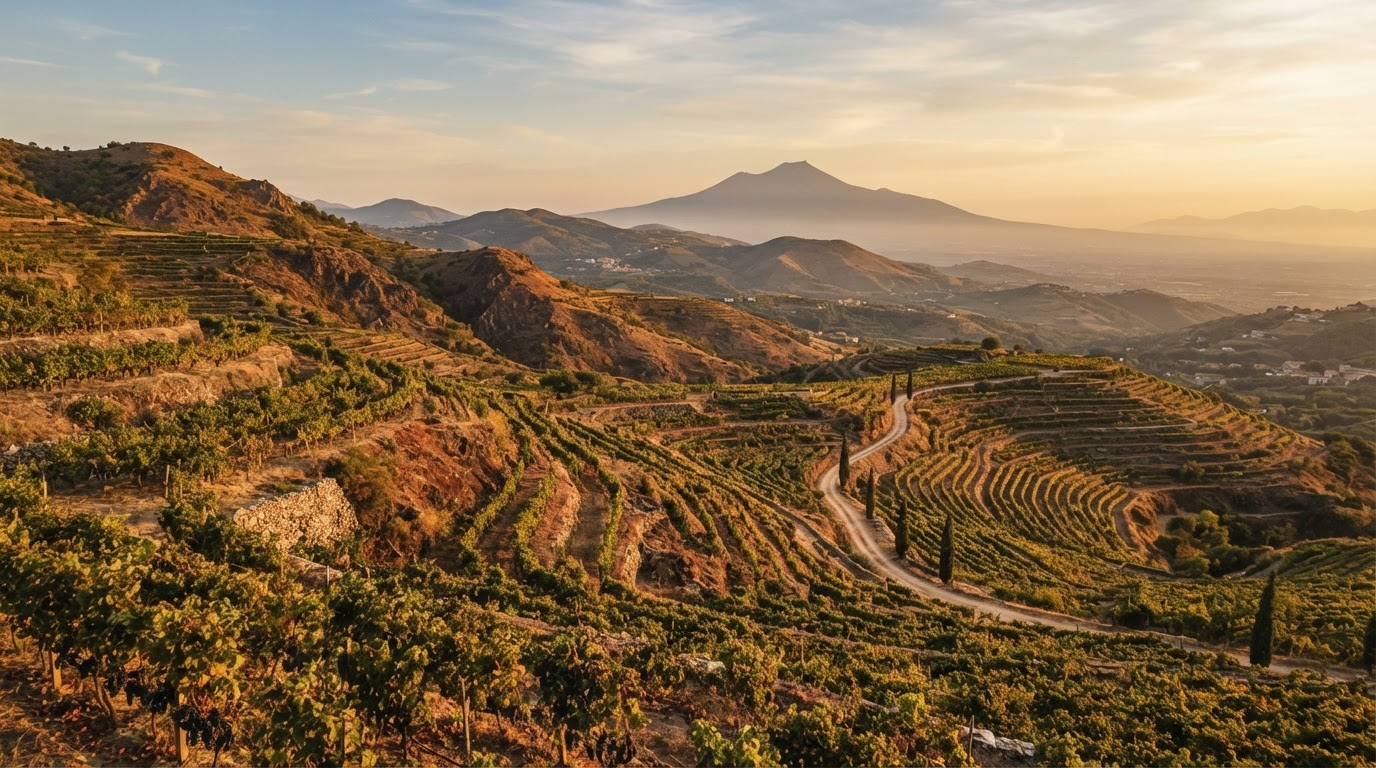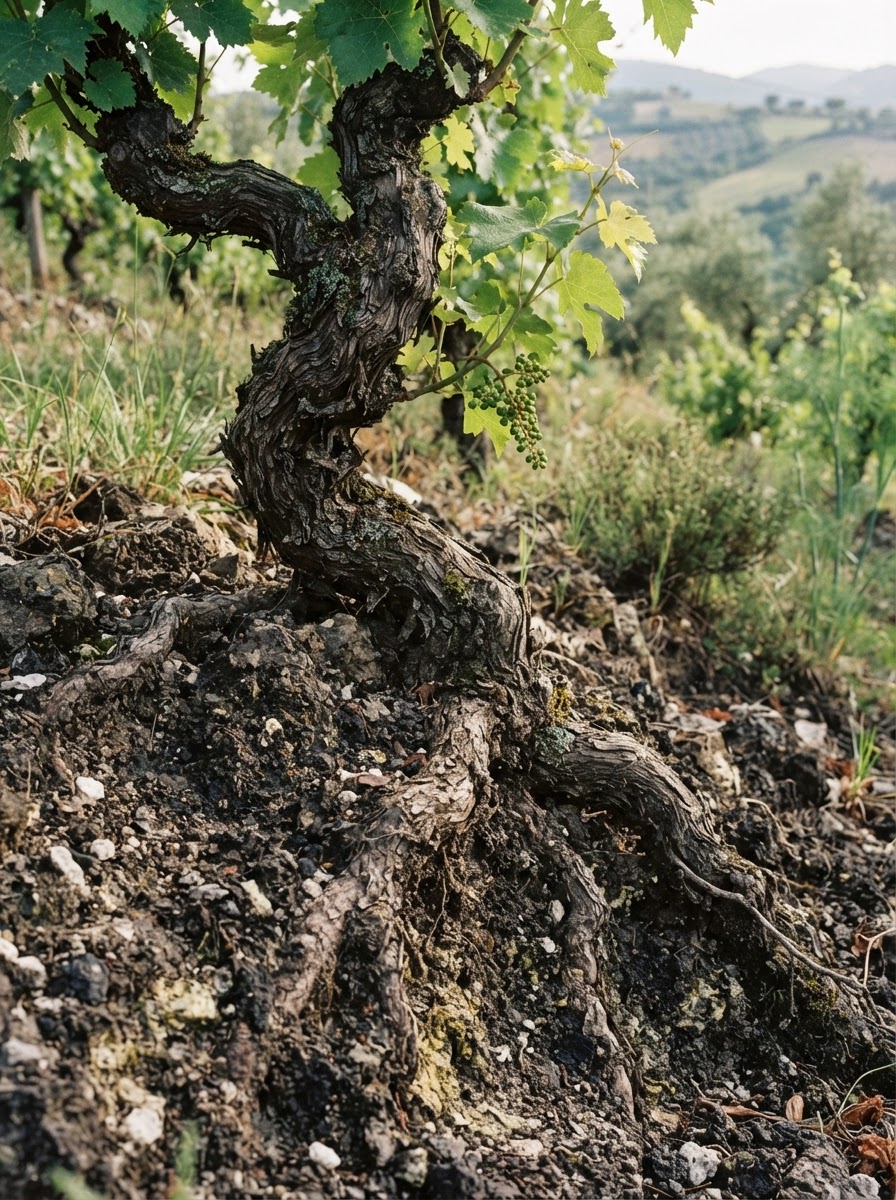
The Cantina del Vesuvio sits in Trecase, on the lower slopes of the volcano. The Maurano family farm centenary Piedirosso and Aglianico vines rooted directly in the black ash that buried this coast in 1944 — and, in a deeper sense, in 79 AD. Phylloxera cannot survive in loose volcanic pumice, so these vines were never grafted. They are still on their own roots, 80 to 120 years old.
The legend of the tears
The wine is called Lacryma Christi — the tears of Christ. The legend says Christ wept over the beauty of the Bay of Naples, and where his tears fell on the slopes of Vesuvius, the vines sprang forth. Whether or not you believe the legend, the wine does taste of the mountain: crushed rock, wild thyme, and a bright, savoury spice that comes from the mineral ash alone.
Our vines were here before the last eruption and they'll be here after the next. We farm them by hand, exactly as my grandfather did — nothing has changed on this mountain.
What ungrafted actually means
- The vine is still on its own roots — no American rootstock, no graft union.
- Roots run deep into the volcanic pumice for water, concentrating the fruit.
- Yields are low and the intensity is higher than a grafted vine can match.
- It is, quite literally, a pre-phylloxera vineyard that survived into the present day.
There are perhaps a dozen places left in the world where you can drink wine from ungrafted vines on the volcanic soil they were born in. Trecase is one of them. We will keep importing Lacryma Christi as long as the Mauranos keep tending it.